 Vietnam Tour Packages
The Best Time to Visit Vietnam
The best time to visit Vietnam depends on which of its three climate zones you land in first. The north has four seasons, the centre has a wet autumn and the south has a dry half and a wet half. This guide breaks the country down month by month, with temperatures in °C from published climate records, the typhoon and flood months, the Sapa cold and the Ha Giang flower season. It also explains how each season affects a Vietnam tour package, from holiday surcharges to flights filling up. If you want the route itself, see Vietnam tour packages compared stop by stop.
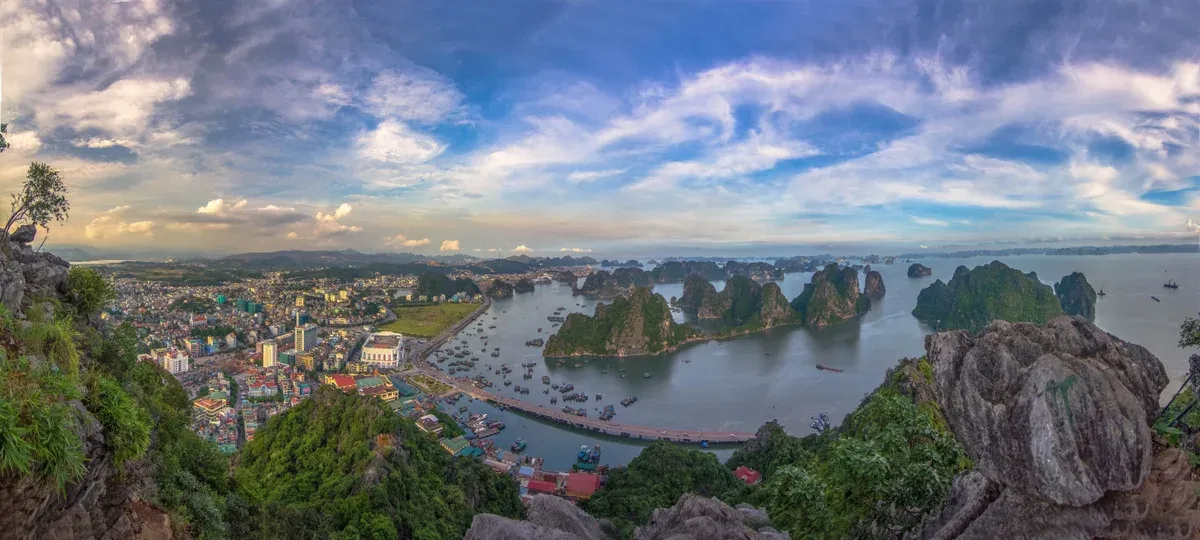
Ha Long Bay from the hill above the town. Photo: Trideep Dutta Photography, CC BY-SA 4.0, via Wikimedia Commons
Quick answer When to go, in short
The best time to visit Vietnam is March to April, when Hanoi averages 20.0 to 23.9 °C, Da Nang 24.2 to 26.5 °C and Ho Chi Minh City 28.1 to 29.3 °C, and all three zones are relatively dry at once. October and November are a close second for the north and centre, though the centre still sees heavy rain. There is no single perfect month for the whole country, because the south's dry season (December to April) overlaps poorly with the north's clear autumn. Pick the region that matters most and read its months below.
Key takeaways
- Short on time? The 9-Day Vietnam Tour, South to North covers the Mekong, Da Nang and a Ha Long and Lan Ha Bay cruise night for $999 per person.
- Want the full country in one trip? The 14-Day Vietnam Tour, Hanoi to Ho Chi Minh City adds Sapa and Hue for $1,544 per person, but carries a compulsory gala dinner at Tet, Christmas and New Year.
- See how the stops fit together on the Vietnam itinerary page before you fix your dates.
- The homepage best time to go section summarises the same seasons next to each package.
Vietnam Month by Month
One country, three climates. The table uses published daily mean temperatures for Hanoi (north), Da Nang (centre) and Ho Chi Minh City (south), with rainfall notes from the same records and Vietnam Tourism's regional summaries.
The Year at a Glance
Figures are daily means in °C. Rainfall highlights come from the same climate tables: Hanoi peaks at 273.7 mm in August, Da Nang at 628.0 mm in October and Ho Chi Minh City at 490 mm in September. The typhoon season runs from May to November, mainly hitting eastern coastal areas, with Vietnam Tourism putting the central peak at September to November and the first typhoons possible in July.
Remember that Sapa is in the mountains: its January mean is only 8.6 °C against Hanoi's 16.4 °C. The table is a planning tool, not a promise, and a cruise night on Ha Long Bay depends on sea conditions in any month.
| Month | North (Hanoi °C) | Centre (Da Nang °C) | South (Ho Chi Minh City °C) | Notes |
|---|---|---|---|---|
| January | 16.4 | 21.5 | 27.3 | Dry in the north and south. Sapa mean 8.6 °C, fog common. Phu Quoc and Con Dao at their best. |
| February | 17.2 | 22.4 | 27.5 | Driest month for Da Nang (23.6 mm) and Phu Quoc (27.2 mm). Tet falls in this month in some years and transport sells out. |
| March | 20.0 | 24.2 | 28.1 | One of the best all-round months. Hanoi has just 47 hours of sunshine. South hot and dry. |
| April | 23.9 | 26.5 | 29.3 | Second best all-round month. Hoi An and Hue pleasant before the autumn rains. Reunification Day on 30 April brings domestic travel. |
| May | 27.4 | 28.4 | 29.5 | Hot everywhere. Rain builds in the north and south. Typhoon season begins. |
| June | 28.9 | 29.4 | 28.8 | Hanoi's 264.4 mm and Sapa's 381.4 mm make the north wet. Ha Long Bay cruise weather can turn. |
| July | 29.2 | 29.3 | 28.4 | Hottest in Hanoi (29.2 °C) with 196 sunshine hours. Sapa wettest stretch begins. First central typhoons possible. |
| August | 28.6 | 29.0 | 28.3 | Hanoi's wettest month at 273.7 mm, Ha Long at 445 mm. Phu Quoc wettest at 485.6 mm. |
| September | 27.5 | 27.6 | 28.1 | Central rains start: Da Nang 350.7 mm, Hue 410.7 mm. North begins to clear. Sapa terraces turn golden. |
| October | 24.9 | 26.0 | 28.0 | A strong northern month, but Hue peaks at 772.7 mm and Da Nang at 628.0 mm. Buckwheat blooms peak in Ha Giang late October. |
| November | 21.5 | 24.4 | 28.0 | North clear and cool. Hue still at 641.7 mm. South dry season begins. Phu Quoc season opens. |
| December | 18.2 | 22.2 | 27.3 | Dry in the north (about 20 mm) and south. Hue still at 349.9 mm. Christmas to New Year can raise Bai Tu Long cruise prices by 30 to 40 percent. |
The Best Months by Region
For the north, Vietnam Tourism names March to May and September to November, and Wikivoyage adds October to December. Hanoi sits at 24.9 °C in October with about 20 mm of rain in December, which is the window for a Ha Long Bay cruise. For the centre, February to April wins: Da Nang averages 22.4 to 26.5 °C with as little as 23.6 mm of rain, before Hue's rainy season, which brings roughly 70 percent of its 2,936.4 mm annual total, starts in September.
For the south, the dry season runs December to April, and Ho Chi Minh City barely moves from 27.3 to 29.5 °C all year. A trip that must cover all three zones at once is best in March or April, and the 10-Day Vietnam Tour, North to South at $1,099 per person covers all three zones.
Sources: Wikipedia: Vietnam, UK FCDO: Vietnam
North, Centre and South
Each zone has its own wet season and its own best months. Here is what the numbers mean on the ground.
The North: Hanoi and Ha Long Bay
Hanoi's daily means run from 16.4 °C in January to 29.2 °C in July, and winter temperatures can drop below 15 °C. Rain is extreme in its spread: about 20 mm in January, February and December against 273.7 mm in August and 264.4 mm in June. February is also the grey month, with just 45 hours of sunshine against 196 in July.
For Ha Long Bay, the cruise season lines up with those dry, cool months. Ha Long town's rainfall runs from 20 to 25 mm in December to February up to 445 mm in August, and typhoons typically pass from late May to early November with a July to October peak, so the drier, lower-typhoon months for an overnight cruise are December to April. October to December also matches Wikivoyage's pick of best northern seasons. Prices follow demand: Tet and Christmas to New Year can raise Bai Tu Long cruise prices by 30 to 40 percent, and the compulsory gala dinner and holiday surcharge on the 8-Day Vietnam Tour, Saigon to Ha Long Bay at $929 per person reflects that. That tour's listing states all sales are final, so date changes are not an option.
The Centre: Hue, Hoi An and Da Nang
The centre has the country's most awkward calendar. Da Nang is warm all year, from 21.5 °C in January to 29.4 °C in June, and its dry season runs January to August with February the driest month at 23.6 mm. Then the northeast monsoon arrives. Rainfall jumps to 350.7 mm in September, 628.0 mm in October and 448.2 mm in November, and Hue is worse: 772.7 mm in October and 641.7 mm in November out of 2,936.4 mm a year. The November 1999 flood in Hue killed 600 people and affected 600,000 homes, so the risk is historical fact, not a rumour. Vietnam Tourism puts the central typhoon peak at September to November.
Practically, that means beach and old town weather is best February to May, when Da Nang sits at 22.4 to 28.4 °C with little rain. Phong Nha caves, 260 km north of Da Nang, face flooding from October to December, and Son Doong runs tours only February to August. The lantern festival in Hoi An falls on the 14th day of each lunar month, so you can catch it in any dry-season month.
The South: Ho Chi Minh City, the Mekong and Phu Quoc
The south is the easiest zone to plan. Ho Chi Minh City holds between 27.3 and 29.5 °C every month of the year. The dry season runs December to April, with just 8 to 18 mm of rain in February and March, and Wikivoyage notes April is the hottest month at 33 °C or more at midday. The wet season, May to November, brings afternoon downpours rather than all-day rain, peaking at 490 mm in September.
The Mekong Delta follows the same pattern, and the floating markets run early whatever the weather: Cai Rang's peak trading is 5:30 to 7:30 AM and largely over by 8 AM. For the islands, Vietnam Tourism lists Phu Quoc and Con Dao as best November to March, with heavy rain and rough seas from June to September, when Phu Quoc records up to 485.6 mm in August against 27.2 mm in February. A dry-season trip that combines all of this is the 3-Day Mekong Delta Tour from Saigon at $261 per person, and the 6-Day South Vietnam and Island Tour at $639 per person adds a flight to Phu Quoc for snorkelling, though the listing does not state that its flights are included in the price.
The Mountains: Sapa and Ha Giang
Altitude changes everything. Sapa town averages 15.3 °C a year, with a January mean of just 8.6 °C and a December mean of 9.4 °C. Winters occasionally fall below freezing and snow has been recorded in town on multiple occasions. Rain runs the other way to the coast: December is the driest month at 65.7 mm and July the wettest at 461.0 mm, out of 2,779.6 mm a year. The golden terraces show from September to November according to Indochina Tour, while Local Vietnam narrows the peak colour to September, followed by mild, dry months in October and November. December to February is cold and foggy, which can spoil a Fansipan cable car ride, a ticket that costs 850,000 VND for adults.
Ha Giang has two clear windows: Guides name October, November, March and April as the best months, with June to September the rainy season. The buckwheat flowers peak at the end of October and early November, opening light pink and turning light purple, with the largest fields in Hoang Su Phi, Dong Van, Lung Cu and Sung La. The loop runs on mountain roads, and the 4-Day Ha Giang Loop Tour at $230 per person runs with Easy Rider drivers in groups capped at 8, which matters in the rain. For the season-by-season detail on that road, see the Ha Giang Loop tour guide.
Vietnam Weather by Region
How the weather differs between north, centre and south. Third-party video by GlobeGazette. This site did not shoot it and has no relationship with the creator.
Tet, Holidays and Festivals
National holidays change prices, opening hours and transport across the whole country. Plan around them rather than discovering them on arrival.
Tet, the Lunar New Year
Tet is the biggest event in the Vietnamese calendar. For 2027 it falls on Saturday 6 February, with New Year's Eve on Friday 5 February. The Ministry of Home Affairs proposed a seven-day break from 4 to 10 February or a ten-day break from 5 to 14 February, and no final decision had been reported, while the Ministry of Culture, Sports and Tourism backed the seven-day plan. Either way, the days around 6 February shut much of the country.
During Tet most small restaurants, street food stalls, cafes, family shops, museums, banks and government offices close from about 6 to 8 February. Hotels, chain restaurants, convenience stores and pagodas stay open. Transport is the bigger problem: for Tet 2026, domestic flights, trains and sleeper buses sold out four to six weeks ahead at two to three times normal fares. Petty theft also rises during Tet, one of the periods the FCDO singles out along with Christmas.
If you travel at Tet, withdraw cash before 3 February, because banks close and small-town ATMs can run dry. If you want quiet streets and celebrations rather than closed museums, Tet can work. If you want a normal touring week, avoid it.
Public Holidays and Festivals Through the Year
Tet is not the only date that fills trains and lifts hotel rates. The table below gathers the holidays and festivals named in the source material, where they happen and when. Where a date belongs to one year, the year is shown.
The Hoi An Lantern Festival falls on the 14th day of each lunar month, so it recurs monthly, and pagoda entry in the Old Town is free on those nights. Mid-Autumn is a children's festival with star lanterns and lion dances, and it is not a public holiday, so businesses and transport run normally.
| Holiday or festival | Where | Date or month |
|---|---|---|
| Tet, Lunar New Year | Nationwide | 6 February (2027 date), closures about 6 to 8 February |
| Hung Kings Commemoration Day | Nationwide | 26 April (2026 date), compensatory day off 27 April |
| Reunification Day and Workers' Day | Nationwide | 30 April and 1 May, four days off in 2026 |
| Da Nang International Fireworks Festival | Da Nang, Han River Port area | 30 May to 11 July in the 2026 edition, six competition nights |
| Hue Festival, four-season model | Hue | Year-round, spring to winter seasons |
| Buckwheat flower peak | Ha Giang, Hoang Su Phi, Dong Van, Sung La | End of October to early November |
| Mid-Autumn Festival | Nationwide, Hanoi Hang Ma Street | 15 September (2027 date), not a public holiday |
| Hoi An Lantern Festival | Hoi An Old Town | 14th day of each lunar month, officially starting between 8:00 and 9:00 PM |
| National Day | Nationwide | 2 September, five days off in 2026 |
Festivals Worth Timing a Trip Around
Three festivals reward planning. The Hoi An Lantern Festival turns the Old Town pedestrian-only and floats paper lanterns costing 5,000 to 10,000 VND, with a 30-minute sampan ride on the Hoai River at 150,000 to 200,000 VND. The lantern night officially begins between 8:00 and 9:00 PM, and most Old Town lighting is switched off by 8:00 PM.
The Da Nang International Fireworks Festival ran 30 May to 11 July with teams from Italy, Japan and Australia launching from the Han River Port area. Hue Festival moved from a biennial event to a year-round four-season model, with single major Imperial City performances at 200,000 to 500,000 VND and a full-week pass at 2,500,000 to 3,500,000 VND. Its next dates are announced late in the year, usually in November or December.
For how festivals fit into a longer route, see the Vietnam itinerary page.
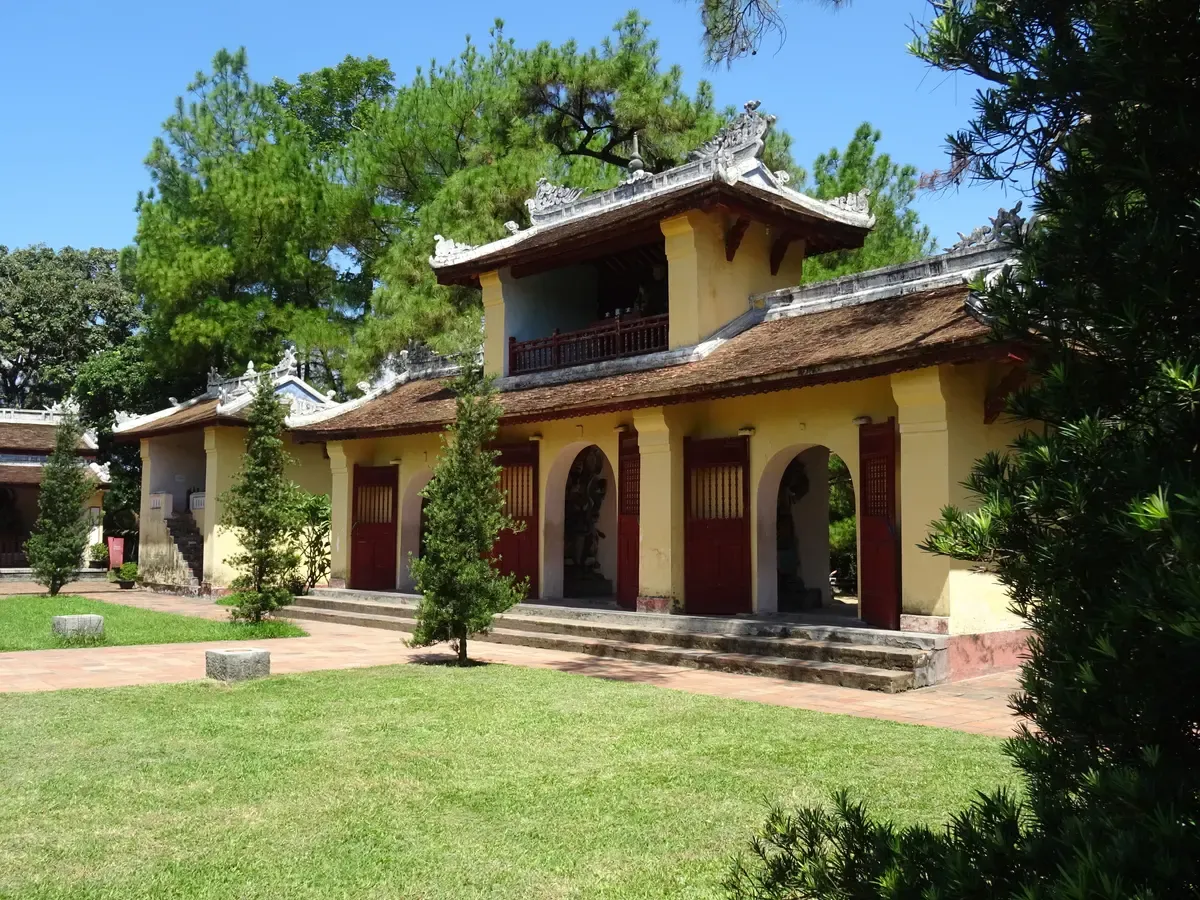
The Thien Mu Pagoda in Hue. Photo: Christophe95, CC BY-SA 4.0, via Wikimedia Commons
Timing a Tour Package
The season changes what a package costs and what it delivers. Here is what each window means for the bookable tours on this site.
Holiday Surcharges and Gala Dinners
Several listings in the comparison carry compulsory extras around the holidays. The 14-Day Vietnam Tour, Hanoi to Ho Chi Minh City at $1,544 and the 8-Day Vietnam Tour, Saigon to Ha Long Bay at $929 both add a compulsory gala dinner on Christmas Eve, New Year's Eve and the Tet date, plus a public holiday surcharge around Christmas, New Year and Tet, with amounts not stated. The 3-Day Sapa Trekking and Homestay Tour at $98 applies a 40 percent public holiday surcharge, especially around Tet, 29 April to 1 May and 30 August to 2 September.
The 2-3 Day Sapa Tour with Limousine at $104 adds an on-site hotel surcharge on peak dates of 950,000 VND for 3-star, 1,450,000 VND for 4-star or 1,950,000 VND for 5-star rooms. Cruise prices around Tet and Christmas to New Year can rise 30 to 40 percent on Bai Tu Long, and the 3-Day Ninh Binh and Lan Ha Bay Cruise at $261 lists a $12 per person peak season surcharge from 1 October to 30 April on top of $35 VAT.
A North to South Route in a Month That Suits Both Ends
A full-country package must satisfy two climates at once. The north's best months are March to May and September to November, while the south is dry from December to April. The centre is dry from February to April but takes 628.0 mm of rain in Da Nang in October and 772.7 mm in Hue in October.
That makes March and April the overlap window where the north's best months, the centre's dry spell and the south's dry season meet. The 10-Day Vietnam Tour, North to South at $1,099 and the 9-Day Vietnam Tour, South to North at $999 both cross all three regions and include a Ha Long Bay cruise night, so their timing matters most. Tours ending in the south, such as the 6-Day South Vietnam and Island Tour at $639, also gain from visiting Phu Quoc in its best months, November to March, as it has rough seas from June to September.
The Mountain Trips by Season
Sapa and Ha Giang have their own calendars. Sapa town averages 8.6 C in January, its coldest month, and snow has been recorded on multiple occasions between 1971 and 2021. Its dry season runs October to March, and the golden terraces show from September, with harvest colour described into November by one source.
Winter nights sometimes sit near 0 C. The 3-Day Sapa Trekking and Homestay Tour works best outside the June and July rains, with July the wettest month at 461.0 mm. Ha Giang's best months are October, November, March and April, and June to September is the rainy season. Buckwheat flowers peak at the end of October and early November, opening light pink and turning light purple days later, with the largest fields in Hoang Su Phi, Dong Van, Lung Cu and Sung La.
The 4-Day Ha Giang Loop Tour at $230 and the 3-Day Ha Giang Loop Small Group at $137 both ride the loop, and October to November is a named best-month window that also has the flowers.
When the Bay Cruise Weather Matters
Ha Long's own numbers put August at 445 mm of rain over 19 rainy days and December at 20 mm. Typhoons typically pass the bay from late May to early November, peaking July to October, and the north's typhoon window is given as June to October with July the peak of risk. A cruise night booked in the December to April window faces the lowest weather risk, and February to April adds milder air at 17.4 to 23.8 C on average.
Any overnight cruise listing, from the 3-Day Ninh Binh and Lan Ha Bay Cruise to the bay night inside the 14-Day Vietnam Tour, Hanoi to Ho Chi Minh City, is exposed to typhoon cancellations if you travel between July and October. For the wider safety picture, see Is Vietnam safe.
Timing Tips, Dos and Don'ts
Do
- Do book Tet transport four to six weeks ahead, because Tet 2026 flights, trains and sleeper buses sold out at two to three times normal fares.
- Do aim for March and April on a full-country tour, because that is where the north's best months and the south's dry season overlap.
- Do plan Ha Giang or Sapa for October or November, because the loop's best months are October, November, March and April and the buckwheat flowers peak then.
- Do carry a light layer for Hanoi winter, because Hanoi's daily mean drops to 16.4 C in January and Sa Pa town sits at 8.6 C.
- Do withdraw cash before 3 February if travelling at Tet, because banks close and small-town ATMs can run dry.
Don't
- Don't book the central coast in October without checking, because Da Nang gets 628.0 mm and Hue 772.7 mm of rain that month and typhoons peak September to November.
- Don't assume museums and restaurants run normally at Tet, because most small eateries, family shops, museums and banks close from about 6 to 8 February.
- Don't plan a Ha Long cruise night in July or August lightly, because August is Ha Long's wettest month at 445 mm and typhoon risk peaks July to October.
- Don't expect festival dates to be fixed by the solar calendar, because the Hoi An Lantern Festival follows the 14th day of each lunar month and Hue Festival dates are usually released in November or December.
Frequently Asked Questions
What is the rainy season in Vietnam?
It differs by region. The north's heaviest rain falls June to August, the south's wet season runs May to November with afternoon downpours, and the central coast takes its rain September to December, with Hue at 772.7 mm in October. The month-by-month breakdown is on the best time to visit Vietnam page.
Is Tet a bad time to visit Vietnam?
It depends on what you want. Tet on 6 February closes most small restaurants, museums and banks for days, and Tet 2026 transport sold out four to six weeks ahead at two to three times normal fares. Tours with holiday extras are flagged in the Vietnam tour packages comparison.
When is Ha Long Bay at its calmest for a cruise?
December to April, when monthly rainfall sits at 20 to 90 mm against 445 mm in August and typhoon risk peaks July to October. A cruise night is included in listings such as the 10-Day Vietnam Tour, North to South.
When can I see the buckwheat flowers in Ha Giang?
They peak at the end of October and early November, opening light pink and turning light purple several days later, with the largest fields in Hoang Su Phi, Dong Van, Lung Cu and Sung La. The 4-Day Ha Giang Loop Tour has an Easy Rider driver for every rider.
Does Sapa get cold enough for snow?
Yes, occasionally. Sapa town averages 8.6 C in January, winters can fall below freezing, and snow has been recorded on multiple occasions between 1971 and 2021, with winter nights sometimes near 0 C. Winter trekking options include the 3-Day Sapa Trekking and Homestay Tour.
Which month is cheapest for a Vietnam trip?
The source material does not give a cheapest month. What it does show is when prices rise: Tet and Christmas to New Year can lift Bai Tu Long cruise rates 30 to 40 percent, and several tours carry holiday surcharges. General costs are compared on the Vietnam trip cost page.