 Vietnam Tour Packages
Ha Giang Loop Tour: The Complete Guide
A Ha Giang Loop tour takes you from Hanoi to Vietnam's far northern mountains for three or four days of riding the country's most dramatic roads. The loop crosses the Dong Van Karst Plateau Geopark on National Highway 4C, a circuit that different guides put between 310 and 450 km. This guide explains how a loop tour works, what the two bookable packages cost and include, and how self-riding compares with an Easy Rider. It forms one stop on the northern leg of most Vietnam tour packages, and it links out to the route and money pages of this site where the wider trip planning lives. The bookable tours are compared on Vietnam vacation packages.
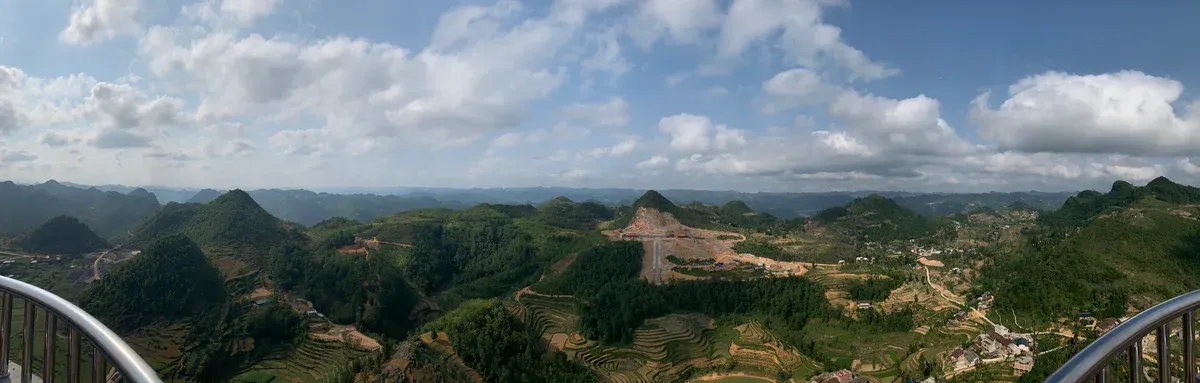
The view from the top of the Lung Cu flag tower. Photo: Lost Cosmonauts, CC BY-SA 4.0, via Wikimedia Commons
Quick answer The short answer
A Ha Giang Loop tour is a 3 or 4 day motorbike circuit in Vietnam's far north that guides put between 310 and 450 km, starting with a sleeper bus from Hanoi that takes about 7 hours and costs roughly 250,000 VND. The 3-day small group package is listed from $137 per person, the lowest of its self-ride and Easy Rider options, while the 4-day version costs $230 per person with Easy Rider drivers. Both add a border permit on top.
Key takeaways
- Compare the 3-day Ha Giang Loop small group tour at $137 per person, rated 5.0 from 808 reviews, with a free night-before homestay in Ha Giang city.
- The 4-day Ha Giang Loop tour at $230 per person caps groups at 8 riders and adds Du Gia, bamboo rafting and Lung Khuy Cave tickets.
- Best months on the loop are October, November, March and April, and June to September is the rainy season. See the best time to visit Vietnam guide for how this fits the rest of the country.
- Riding legally needs a Category A licence, guides say only a 1968 convention permit is accepted, and helmets are mandatory. Read is Vietnam safe before deciding to self-ride, and see the route stop by stop to place Ha Giang in a longer trip.
How a Ha Giang Loop Tour Works
Every bookable Ha Giang Loop tour follows the same shape. A night bus out of Hanoi, a night in Ha Giang city before the riding starts, three or four days on the bike, and a bus back.
From Hanoi to the Loop and Back
The trip starts long before anyone touches a motorbike. Hanoi to Ha Giang is about 280 km by road, and the journey takes about 5 hours by bus or about 4 hours by car. Buses run from 57 Cua Dong Street in central Hanoi, with five departures a day. A sleeper bus is quoted at about 7 hours and roughly 250,000 VND. Most tours put you on a night bus, so you reach Ha Giang city in the early hours and sleep a few hours in a hostel or homestay before the riding begins. That night before is not wasted time. It lets you meet the guide, collect helmets and gear, sort out the border permit and start rested.
The loop itself runs on National Highway 4C, the road Tuyen Quang authorities describe as about 350 km long. Other guides put the full circuit between 310 and 450 km depending on detours, with a standard route of about 370 km. You sleep in family homestays and small town hotels along the way and return to Ha Giang city on the final afternoon for the bus back to Hanoi. If you are stringing the loop onto a longer northern itinerary, the Vietnam itinerary page shows where it slots between Sapa and the coast.
| Leg | How | Time or distance |
|---|---|---|
| Hanoi to Ha Giang city | Bus from 57 Cua Dong Street, five departures a day, sleeper bus about 250,000 VND | About 280 km, about 5 hours by bus, about 4 hours by car |
| The loop itself | Motorbike with a guide, or as a pillion with an Easy Rider driver | Tuyen Quang authorities describe about 350 km on National Highway 4C, guides quote 310 to 450 km with detours |
| Return to Hanoi | Sleeper bus from Ha Giang city, included on the 3-day tour but not on the 4-day tour | About 280 km, sleeper bus about 7 hours |
The Rhythm of a 3-Day and a 4-Day Loop
The standard route breaks into short daily legs that leave plenty of time for stops. Ha Giang city to Tam Son in Quan Ba district is 46 km and takes about 1.5 hours, including the climb to Heaven's Gate at roughly 1,500 m above sea level. Tam Son to Yen Minh is 42 km, another 1.5 hours. Yen Minh to Dong Van is 45 km and takes 1.5 to 2 hours, and this is where most itineraries push north to the Lung Cu flag tower before settling in Dong Van for the night. Dong Van to Meo Vac over the Ma Pi Leng Pass is just 22 km but takes about an hour, because the 11 km climb, built in the 1960s by local minority groups, is the slowest and most photographed stretch of the whole loop.
A 3-day tour compresses this into three riding days and returns to Ha Giang city from the Meo Vac area. A 4-day loop adds the southern detour through Du Gia: Meo Vac to Du Gia is 60 km and takes 2.5 to 3 hours, and Du Gia back to Ha Giang city is 80 km, about 3 hours. One guide reckons a full 4-day circuit totals about 310 km, with days of roughly 100, 50, 90 and 70 km. The fourth day is not about distance. It buys you the quietest roads, a waterfall stop near Du Gia and a gentler final afternoon, which is why riders with the time usually take it.
Sources: Wikipedia: Vietnam, UK FCDO: Vietnam
The Loop Tours Compared
Two bookable Ha Giang Loop tours cover this route from Hanoi. Both are small group packages, and they differ in length, price and what the price actually covers.
Price, Length and Group Size
The figures below come from the tour listings themselves, in US dollars as the operators publish them. Both tours include a bus from Hanoi, the motorbike, helmets and meals, and both end back in Ha Giang city. The 4-day price includes an Easy Rider driver.
The 3-day listing lets you choose self-riding, an Easy Rider in a shared room or an Easy Rider with a private room, and it does not say which option the $137 belongs to. The 4-day tour does not include the bus back to Hanoi, though the operator can arrange it. Neither includes everything: the border permit is a mandatory extra on both, and the 3-day listing prices it at $10 per person while the 4-day listing excludes it without stating the amount.
On the 3-day package, the final dinner is also at your own cost, and a pickup in Ha Long or Cat Ba costs $10 per person extra.
| Tour | Price | Days | Rider | Group |
|---|---|---|---|---|
| 3-Day Ha Giang Loop Small Group | $137 per person | 3 days | Self-ride or Easy Rider, by option | Limited to 10 on the listing header, up to 12 guests per the fine print |
| 4-Day Ha Giang Loop Tour | $230 per person | 4 days | Easy Rider pillion | Limited to 8 participants |
Which Tour Suits Which Traveller
The 3-day package at $137 per person is the shorter and cheaper option, with 808 reviews at 5.0. It runs the classic northern route through Quan Ba, Yen Minh, Meo Vac, the Ma Pi Leng Pass and Dong Van, includes 3 breakfasts, 3 lunches and 2 dinners, and gives you a free homestay night in Ha Giang city before the riding starts. Its border permit is a fixed $10 per person, which makes the real total easy to work out. Choose it if your schedule is tight or if Ha Giang is one stop on a longer northern run.
The 4-day tour at $230 per person has 463 reviews at 4.9, caps its groups at 8, and adds the Du Gia leg, bamboo rafting and tickets for Lung Cu Flag Point and Lung Khuy Cave in the price. It includes 4 breakfasts, 4 lunches and 3 dinners, and throws in an extra hostel night. Meals on this one are described as homemade and simple and may repeat, so nobody should book it expecting restaurant food. Its weak point is the border permit, which is excluded with no stated amount, so ask the operator before booking. Anyone riding as a pillion is covered on the 4-day tour, and the 3-day listing offers an Easy Rider as one of its options. Solo riders who want to drive themselves should read the licence and permit section further down this page first. If you are weighing the loop against a Ha Long cruise night instead, the short trips section lists the 2 and 3 day options side by side.
- Shortest and cheapest: the 3-day small group tour, $137 per person, permit $10 extra, final dinner at your own cost.
- Most complete: the 4-day tour, $230 per person, groups capped at 8, cave and rafting tickets included, permit amount not stated.
- Both include the bus from Hanoi, the bike and most meals. The 4-day price includes an Easy Rider driver and the 3-day listing offers one as an option.
- Neither includes domestic flights or a hotel in Hanoi before departure, and the 4-day tour leaves out the bus back.
7 Mistakes Everyone Makes on the Ha Giang Loop
What first-time riders get wrong on the loop. Third-party video by wanderlost. This site did not shoot it and has no relationship with the creator.
The Route, Town by Town
The loop follows National Highway 4C through the Dong Van Karst Plateau Geopark, and every leg has a known distance and ride time. Here is the road in the order most tours ride it.
Ha Giang City, Quan Ba and Yen Minh
Almost every Ha Giang Loop tour starts in Ha Giang city, which most riders reach on the sleeper bus from Hanoi. The first leg climbs from Ha Giang city to Tam Son in Quan Ba district, 46 km that take about 1.5 hours. On the way up you pass Quan Ba Heaven's Gate at roughly 1,500 m above sea level, where entry costs 20,000 to 30,000 VND and the stop takes 30 to 45 minutes. One guide advises arriving before 9am, because tour convoys reach the gate from mid-morning.
Near Tam Son, the Quan Ba Twin Mountains, also called the Fairy Bosom Hills, are two rounded karst hills seen from a viewpoint reached by a staircase of under 10 minutes. That viewpoint has no entrance fee. Hmong legend says the fairy Hoa Dao left her breasts behind to nourish her baby, and the hills rose from them.
The second leg runs 42 km from Tam Son to Yen Minh and takes about 1.5 hours. Yen Minh is a common lunch and fuel stop before the road enters the densest karst country. Note that Ha Giang is now part of Tuyen Quang province after the 2025 merger, and the 2026 directive on motorbike tourism covers National Highway 4C from former Ha Giang city to Dong Van and Meo Vac.
Dong Van, Lung Cu, Ma Pi Leng, Meo Vac and Du Gia
The third leg is Yen Minh to Dong Van, 45 km that take 1.5 to 2 hours. Dong Van is the highest-profile overnight stop, and Ha Giang city to Dong Van is about 150 km in total. Many riders push on from Yen Minh through Sung La to Lung Cu, the northernmost point of the loop. The flag tower stands 24 km from Dong Van town, is 34.85 m tall by Viet Nam News' figure and stands at 1,470 m above sea level by the same source, though other sources give 30 m or 33 m for the height. Entry costs 40,000 VND, a stone staircase of 389 steps leads to the base and a spiral iron staircase of 140 steps climbs inside to the top. Restoration work restricted access to the base on past occasions, so ask locally before counting on the summit view.
The highlight of the whole loop comes next: Dong Van to Meo Vac over the Ma Pi Leng Pass, 22 km that take about an hour of riding but far longer with stops. The pass has an 11 km climb and was built in the 1960s by local minority groups along the Happiness Road, which linked Ha Giang city with Dong Van and Meo Vac between 1959 and 1965. Below the pass, a boat trip on the Nho Que river costs 120,000 VND and lasts about an hour.
From Meo Vac the road turns home through Du Gia, 60 km that take 2.5 to 3 hours, with a homestay night and a waterfall stop. The final run from Du Gia back to Ha Giang city is 80 km and takes about 3 hours. The whole circuit sits inside the Dong Van Karst Plateau Geopark, which joined the UNESCO Global Geoparks Network in 2010 and covers about 2,356.8 square km across Meo Vac, Dong Van, Yen Minh and Quan Ba districts. Seventeen ethnic minority groups live within the geopark, including Hmong, Dao, La Chi, Pu Peo, Lo Lo, Tay and Nung.
Distances and Fees at a Glance
The table pulls the key leg lengths, ride times and entry fees for the loop from Vietnamese tourism sources and park listings. Operator itineraries quote longer distances on some legs, for example 45 to 60 km from Dong Van to Meo Vac. Use it to judge which days are long and which stops cost money beyond your tour price.
| Stop | What it is | Figure |
|---|---|---|
| Ha Giang city to Tam Son (Quan Ba) | First leg of the loop | 46 km, about 1.5 hours |
| Quan Ba Heaven's Gate | Mountain pass viewpoint at about 1,500 m | Entry 20,000 to 30,000 VND, stop 30 to 45 minutes |
| Tam Son to Yen Minh | Second leg | 42 km, about 1.5 hours |
| Yen Minh to Dong Van | Third leg | 45 km, 1.5 to 2 hours |
| Lung Cu flag tower | Flag tower 24 km from Dong Van, 34.85 m tall by one source, 389 plus 140 steps | Entry 40,000 VND |
| Dong Van to Meo Vac via Ma Pi Leng | Pass with an 11 km climb | 22 km, about 1 hour |
| Nho Que river boat | Boat trip below Ma Pi Leng | 120,000 VND, about 1 hour |
| Meo Vac to Du Gia | Homestay leg | 60 km, 2.5 to 3 hours |
| Du Gia to Ha Giang city | Final leg | 80 km, about 3 hours |
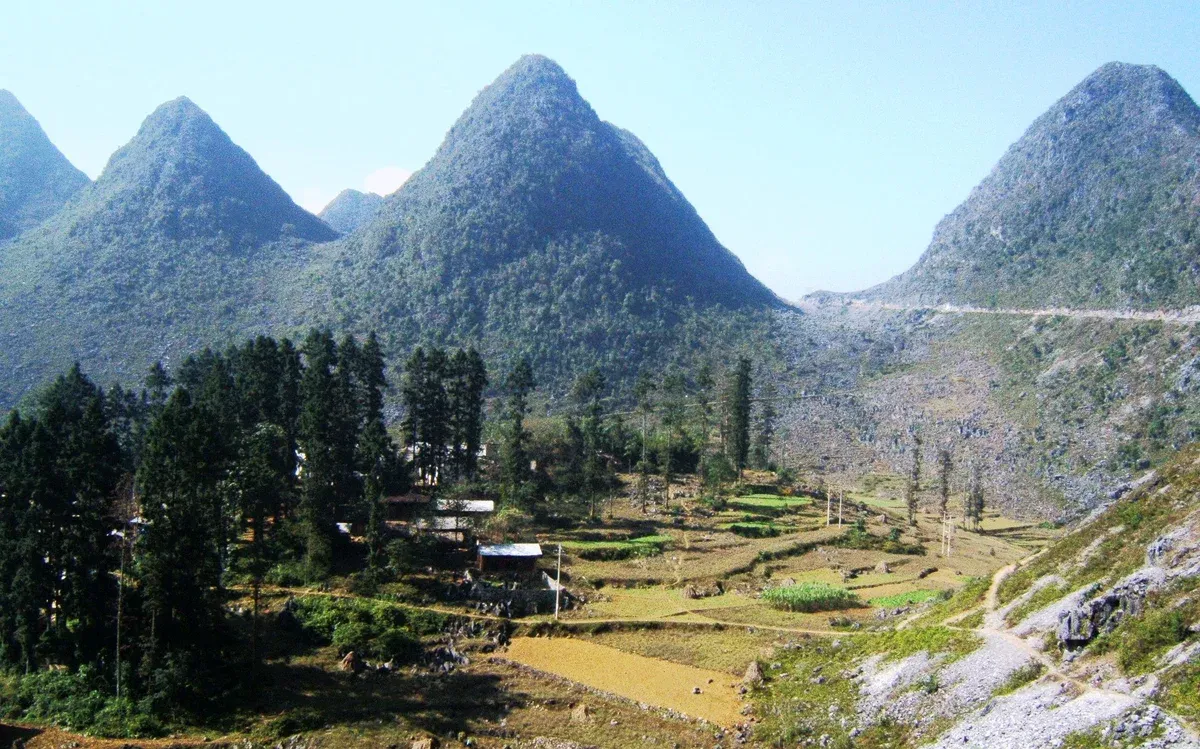
The Hmong lord residence at Sa Phin on the road to Dong Van. Photo: BacLuong at Vietnamese Wikipedia, Public domain, via Wikimedia Commons
Self-Ride or Easy Rider
You can ride the loop yourself or sit behind a local driver. The licence rules, the permit and the prices decide it for most travellers.
Licence, Permit and Insurance
Riding the Ha Giang loop legally needs a Category A motorcycle licence, and an A1 licence works for bikes under 125cc. Vietnam recognises only International Driving Permits issued under the 1968 Vienna Convention, so a 1949 convention permit is not accepted, according to travel guides. That matters because the United States and Canada primarily issue 1949 permits, which may have no legal effect in Vietnam. The United Kingdom, by contrast, is told by its own foreign office that a 1968 permit plus the national licence is the requirement.
On top of the licence you need the Ha Giang border permit, which costs 230,000 VND. Rental shops on the loop must supply regularly maintained bikes with helmets and other safety gear under the 2026 directive, and unlicensed firms may not organise or sell Ha Giang Loop tours at all.
Insurance is the quiet deal-breaker. Insurers can reject claims for medical treatment, bike damage or third-party liability if you ride in Vietnam without a locally valid licence. unofficial international driving licences sold online have no legal standing. Helmets are mandatory for drivers and passengers, and the rider is the one who gets fined, with police fines for foreigners running about $20 per offence.
What It Costs to Ride Yourself
Self-riding looks cheap until you add the pieces. A semi-automatic bike rents for about 150,000 to 200,000 VND per day and a 150cc manual for about 350,000 VND. Motorcycle insurance for the loop runs about 100,000 VND per day, fuel is about 25,000 VND per litre, and the border permit adds 230,000 VND.
Add homestay nights and meals, then weigh that against the risk of a rejected insurance claim.
The Easy Rider Option
An Easy Rider is a local driver who rides the bike while you sit on the back. It costs from about 800,000 VND per day plus food and lodging, which is more than self-riding but removes the licence problem entirely and puts a rider who knows the 46 km of curves between Ha Giang city and Quan Ba in charge. Two safety notes: Canada warns that a crash in Vietnam can bring criminal charges, compensation demands or a travel ban until compensation is paid, and a 19-year-old British tourist died in early April 2026 while using an easy rider service on the Ha Giang Loop. Choose an operator working under a formal agreement with a licensed tour company, as the directive requires, with drivers, routes and incident responsibilities written down.
The 4-day tour uses Easy Rider drivers, and the 3-day listing offers Easy Rider as one of three options. The 4-day Ha Giang Loop tour costs $230 per person, caps groups at 8 and includes Easy Rider drivers, meals, gear and the Hanoi to Ha Giang bus. The 3-day Ha Giang Loop small group tour costs $137 per person, includes bike, fuel, a guide and a free homestay night before the ride, and charges a $10 border permit fee per person on top.
When to Ride the Loop
The loop sits far north and high, so the riding window is narrower than the rest of the country. For seasons nationwide, see the best time to visit Vietnam.
The Best and Worst Months
The best months for the Ha Giang loop are October, November, March and April. June to September is the rainy season, when mountain roads turn slick and landslides become a real risk. Vietnam Tourism's national picture agrees, listing the north's heaviest rain in June to August and its best months as March to May and September to November.
Winter rides are possible but cold. Hanoi winter temperatures can drop below 15 degrees Celsius, so expect colder nights in the mountains.
Buckwheat Flowers and the Harvest
The buckwheat bloom peaks at the end of October and early November, with the largest flower areas in Hoang Su Phi, Dong Van, Lung Cu and Sung La. The flowers open light pink and turn light purple several days later, The dates shift from year to year, so check before you plan around the flowers. For general safety planning on any Vietnam trip, read whether Vietnam is safe.
Tips for the Loop
Do
- Do buy the 230,000 VND border permit before riding past Dong Van.
- Do carry your licence and a 1968 convention international driving permit if you self-ride, because insurers can reject claims without a locally valid licence and fines for foreigners run about $20 per offence.
- Do start riding early and reach Quan Ba Heaven's Gate before 9am, because tour convoys arrive from mid-morning and the viewpoint fills up.
- Do allow a full day for the Dong Van to Meo Vac leg, because the 22 km over Ma Pi Leng with its 11 km climb and the Nho Que boat at 120,000 VND take far longer than the one-hour ride time.
- Do take the Hanoi to Ha Giang sleeper bus the night before, because at about 7 hours and roughly 250,000 VND it lets you start the 46 km first leg fresh in the morning.
Don't
- Don't ride the loop from June to September, because that is the rainy season and mountain roads are at their most dangerous.
- Don't drink and ride, because Vietnam has zero tolerance for alcohol while driving and any alcohol in your system when tested can bring a fine and possible imprisonment.
- Don't assume a 1949 convention international driving permit works, because Vietnam recognises only the 1968 convention version.
- Don't book with an unlicensed operator, because the 2026 directive forbids unlicensed firms from organising Ha Giang Loop tours and requires formal agreements covering drivers, routes and incident response.
Where to Stay Before and After the Loop
Each link opens the live room list on the booking site, with today's prices. A night in Ha Giang city before the start keeps the first riding day short.
Ha Giang city
- Suits
- The night before the loop, near the bus arrivals
Hanoi to Ha Giang is about 280 km by road.
See stays in Ha Giang cityDong Van
- Suits
- A night in the old quarter near the Chinese border
Dong Van is a stop on most loop routes.
See stays in Dong VanHa Giang Loop Tour FAQ
How do I get from Hanoi to Ha Giang city?
A sleeper bus takes about 7 hours and costs roughly 250,000 VND, arriving in time for a night in Ha Giang city before the ride. Both the 3-day small group tour and the 4-day tour include this bus.
How long does the Ha Giang Loop take to ride?
The loop runs roughly 350 km on National Highway 4C, and 3 to 4 days is the standard pace, with leg distances of 46 km, 42 km, 45 km, 22 km, 60 km and 80 km. Compare the 4-day tour at $230 with the 3-day tour at $137.
Do I need a licence for an Easy Rider tour?
No, because the local driver operates the bike, which is why riders without a valid Category A or A1 motorcycle licence choose Easy Rider. The 4-day Ha Giang Loop tour runs on Easy Rider drivers with groups capped at 8.
Is the Ha Giang Loop worth it?
If mountain roads matter to you, yes, because the 11 km climb over Ma Pi Leng, the Nho Que river below it and the 17 ethnic minority groups of the Dong Van Karst Plateau Geopark have no equivalent elsewhere in Vietnam. See the full route in the Ha Giang Loop tour guide.
What extra costs come on top of a Ha Giang Loop tour price?
The border permit is the usual extra, and it costs 230,000 VND if bought yourself. On the 3-day small group tour the permit is charged at $10 per person on top of the $137 tour price.
When is buckwheat flower season in Ha Giang?
The bloom peaks at the end of October and early November, with the largest areas in Hoang Su Phi, Dong Van, Lung Cu and Sung La, and the flowers turn from light pink to light purple within days. Plan around the window using the best time to visit Vietnam.