 Vietnam Tour Packages
Is Vietnam Safe? The Honest Answer for Visitors on a Tour Package
Is Vietnam safe for tourists? The short answer is yes, with a few known risks worth understanding before you go. Canada advises normal security precautions, the UK FCDO's headline warning is the storm season, and violent crime against foreigners is rare. What actually hurts visitors is traffic, petty theft, bag snatching and the occasional scam. This guide walks through what the governments advise, in their wording, and what it means for a traveller booked on a Vietnam tour package. It covers road rules, the Ha Giang Loop, storms and floods by region, drink spiking, health basics and the emergency numbers that work here. The bookable tours are compared on Vietnam vacation packages.
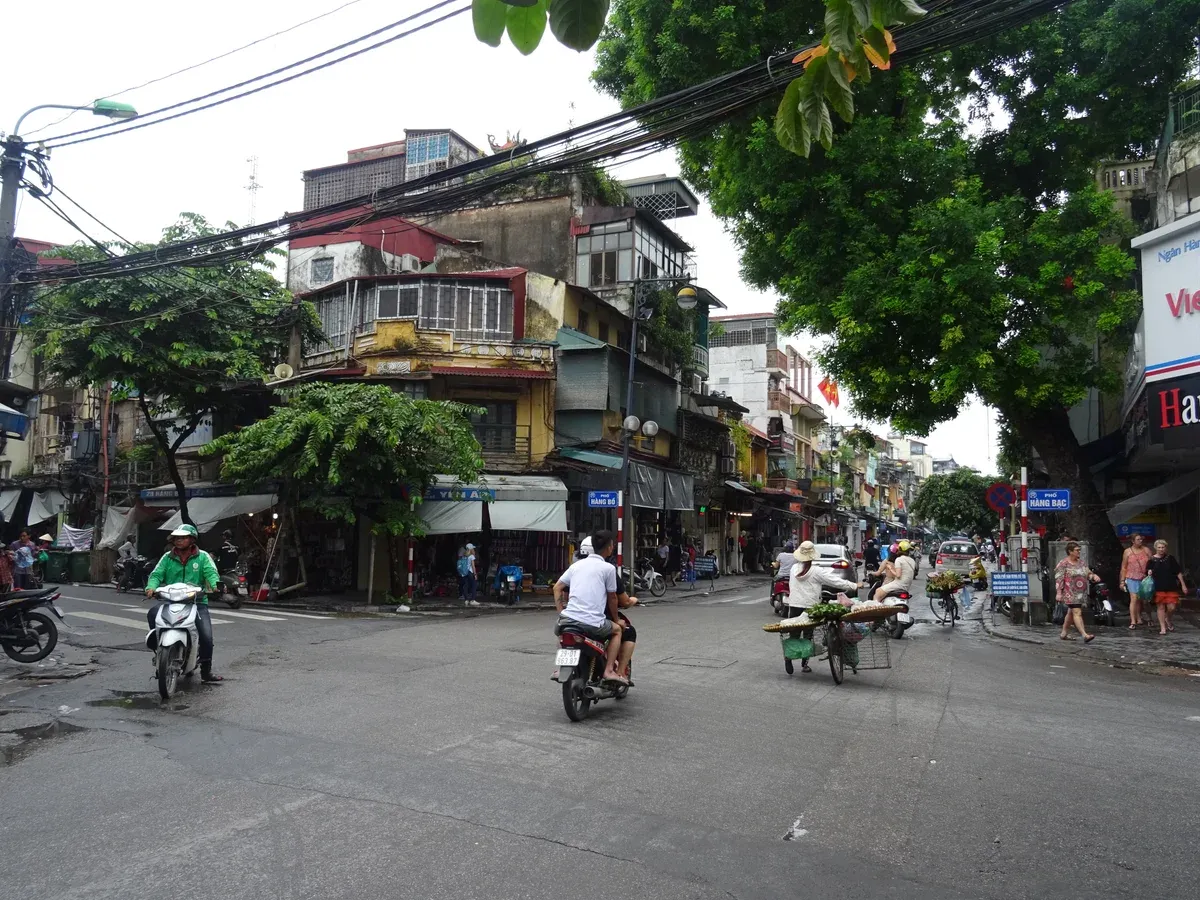
The crossing of Hang Bac and Hang Bo streets in the Hanoi Old Quarter. Photo: Christophe95, CC BY-SA 4.0, via Wikimedia Commons
Quick answer Is Vietnam safe?
Yes, Vietnam is safe to travel for most visitors. Canada advises only normal security precautions, and the UK FCDO reports that violent crime against foreigners is rare. The real risks are petty theft, motorcycle bag snatching, road traffic and tropical storms from May to November. A booked tour puts a driver and guide in charge of the roads and transfers.
Key takeaways
- Canada carries the risk level wording Take normal security precautions, and the FCDO says Vietnam has no recent history of terrorism.
- Compare what the bookable Vietnam tour packages on this site include, from guided transfers to entrance fees, in the comparison table.
- Riding in Vietnam needs a licence valid there, and the UK FCDO and Canada differ on whether a 1968 international driving permit is enough. An Easy Rider Ha Giang Loop tour puts a local driver on the bike instead of you.
- Storms and floods are regional and seasonal, so check the best time to visit Vietnam by region before you fix your dates.
What the Governments Advise
Canada's wording is its lowest routine level and the FCDO's headline warning is about the storm season, not about visiting.
The Advisory Levels
The table below compares the wording of the travel advisories covered in this guide. Canada carries the phrase Take normal security precautions, its lowest routine level. The UK FCDO's headline warning for Vietnam covers the tropical storm season from May to November, which can cause serious travel disruption. The US State Department rated Vietnam Level 1, Exercise normal precautions, when its four-level system launched in January 2018. That was the level at launch. Check the State Department site for the current US level before you book, and Australia's Smartraveller page for its wording.
What this means for a traveller on a Vietnam vacation packages is simple. The advisories above do not warn against visiting, and the standard advice about checking insurance applies as it would anywhere.
A note on insurance, because the FCDO is blunt about it. Insurance should cover your itinerary, your planned activities and expenses in an emergency. Canada adds that medical evacuation from Vietnam is very expensive, and the FCDO advises cover that includes air ambulance and repatriation. If your package includes adventure activities such as motorbike riding, confirm your policy covers them.
| Government | Advice | Notes |
|---|---|---|
| Canada | Take normal security precautions | Advisory organised under safety and security, road safety, entry and exit, health, laws and culture, and natural disasters |
| United Kingdom (FCDO) | Headline warning on tropical storms | Headline warning covers the tropical storm season from May to November and serious travel disruption |
| United States | Level 1, Exercise normal precautions, when the four-level system launched in January 2018 | Current level not stated, check travel.state.gov |
| Australia | Not stated | Check smartraveller.gov.au before you book |
Regional Warnings, Storms and Floods
The biggest genuine hazard in Vietnam is weather, not crime. The FCDO says the typhoon season normally runs from May to November and mainly affects eastern coastal regions. Canada puts typhoons from June to December and says they can develop quickly. The two advisories differ on this, so treat the season as roughly the second half of the year and check forecasts close to your dates.
The flooding pattern splits by region. Canada says the rainy season runs from June to September in the north and south and from October to December in central Vietnam, with common flooding around Hanoi and the Mekong Delta. That matches the rainfall numbers: Hue takes 772.7 mm of rain in October and Da Nang 628.0 mm, while Hanoi peaks in August at 273.7 mm and Ho Chi Minh City in September at 490 mm. Phong Nha caves face flooding from October to December. Canada also notes El Nino conditions expected to strengthen through 2026 and into 2027, raising the risk of droughts, floods and severe storms.
The FCDO adds a warning that sounds odd but matters. Escalation in the Middle East has caused widespread travel disruption that may affect your plans even when your destination is not in the Middle East. If you are routing through a hub on the way to Vietnam, keep connections flexible. For month by month detail, see the guide to the best time to visit Vietnam.
What the Advisories Say About Crime Against Foreigners
Both the UK and Canada agree on the core picture. The FCDO says violent crime against foreigners is rare. Canada says the same, while noting that knives and razors have been used and that personal disputes occasionally turn violent. So the honest answer to is Vietnam safe for tourists is that the serious stuff is uncommon and the petty stuff is not.
Where the theft actually happens matters more than how likely it is. The FCDO says theft on buses and trains is a risk, especially on overnight trains while passengers sleep. Canada says pickpocketing and bag snatching are most common in larger cities and during Tet, and that theft is frequent on sleeper trains and at airports and train stations. Tet is the lunar new year, which Canada says runs from late January to late February and can disrupt banking, transport and food distribution.
Two specific safety notes round out the picture. Canada says Ha Long Bay has had boating accidents and advises using reputable operators and refusing overloaded or poorly maintained boats, which on a package means letting your tour operator choose the cruise. Canada also says landmines are a serious risk, especially in Quang Tri province, along the Laos border and in North and Central Vietnam, and advises staying on paved roads. Independent riders and trekkers in those areas should take it seriously. The FCDO says Vietnam has no recent history of terrorism but that attacks cannot be ruled out.
Everyday Risks: Theft, Scams and Drinks
Most problems visitors meet in Vietnam are small, predictable and avoidable. Here is what the advisories name.
Petty Theft and Bag Snatching
The FCDO says petty theft and pickpocketing are common, especially in crowded areas and during Christmas and Tet. The signature crime is motorcycle bag snatching, which the FCDO calls common, and its advice is specific: carry your bag on the side away from the traffic. That keeps the bag away from a passing bike.
Canada adds that theft is frequent on sleeper trains and at airports and train stations, and Wikivoyage warns that bags on overnight buses have been searched with electronics taken, advising a padlock on hand luggage. On a booked package this is largely your driver and your hotel, but the overnight sleeper bus to Ha Giang or Sapa is where self-managed luggage security counts. Keep valuables, passports and cash on your person rather than in a hold bag.
One theft-adjacent rule comes from the money side: the FCDO advises against giving your passport as a deposit for a rented vehicle, and Wikivoyage says a hostel that insists on holding your passport is not legitimate. Canada says hotels usually report your presence to the authorities and advises asking for your passport back after check-in.
The Scams Named in the Sources
The named scams cluster around transport and money. Wikivoyage lists taxi drivers switching a 500,000 VND note for a 20,000 VND note when you pay. The same source warns of airport taxi overcharging, saying to avoid paying about 500,000 dong, and notes Hanoi touts at arrivals asking as much as 800,000 dong from groups of 3 or 4 foreigners, against a metered fare of 300,000 to 350,000 dong from the airport to the Old Quarter.
The FCDO warns that free airport or station bus transfers to hotels may be scams unless arranged in advance. Wikivoyage describes a bus scam where guides claim you have no hotel booking and drop you at a commission hotel, plus bogus monks soliciting donations in tourist areas, restaurants running two menus, and cyclo drivers who demand far more than the reasonable 20,000 dong for up to 2 km.
One warning deserves its own paragraph. The FCDO warns of job scams in the Mekong region that have led to people being illegally moved to neighbouring countries and forced into online scamming. This targets job seekers rather than holidaymakers, but do not accept work offers that arrive during a trip.
If you are weighing whether the country justifies the paperwork, note that the e-visa costs $25 for single entry or $50 for multiple entry with a stay of up to 90 days. More on money in the guide to the Vietnam trip cost.
Taxis, Grab and Drink Spiking
For ground transport, both governments give the same answer. The FCDO recommends licensed taxis or apps such as Grab or XanhSM. Canada considers motorcycle taxis known as xe oms unsafe and advises official taxis or trusted ridesharing apps instead. Grab sets the price and destination upfront in the app, payable by cash or card, which removes the meter argument entirely. Wikivoyage lists metered taxi flag fall at 5,000 VND for small cars, 9,000 VND for mid-range saloons and 11,000 VND for SUVs, rising by 1,000 VND in the evening, and advises walking away from any taxi with no written fare chart or no driver photo on the dashboard.
The more serious drink risk is deliberate drugging. Canada warns that card and ATM fraud is frequent in Vietnam, including the drugging of victims, and that snacks, drinks, gum and cigarettes may be drugged. The FCDO warns of drink spiking in tourist areas. Practical translation: never leave your drink unattended, and be wary of food or cigarettes from strangers.
Alcohol itself carries a separate hazard. The FCDO says methanol poisoning from drinks has occurred in licensed venues in Vietnam, and Canada says unregulated alcohol has caused deaths from methanol and advises buying only reputable brands. Stick to sealed, branded bottles and known venues, especially outside the big cities. If the worst happens, the emergency numbers are police 113, fire 114 and ambulance 115, with 112 the national search and rescue hotline. Wikivoyage adds that the general emergency number usually does not serve in English, so a taxi may be faster than a public ambulance in a pinch.
Vietnam Travel Tips and Scams to Avoid
The everyday scams and how to avoid them. Third-party video by Amanda & Felix Eats. This site did not shoot it and has no relationship with the creator.
Traffic, Motorbikes and the Ha Giang Loop
Roads are the biggest real risk in Vietnam for a visitor. The numbers, the licence rules and the pillion option are all set out here.
What the Road Figures Say
The UK FCDO says road law compliance in Vietnam is poor, and Canada says road safety is poor nationwide with fatal accidents often involving motorcycles and pedestrians. The scale is real. Vietnam recorded 21,532 traffic accidents, 9,954 deaths and 16,044 injuries in 2024 according to the Traffic Police Department, and 18,601 accidents with 10,491 deaths in 2025 according to Tuoi Tre. Sources differ on the 2024 baseline, so compare the years with care. In the first five months of 2026 accidents fell 17.9 percent and deaths 7.5 percent year on year.
Motorcycles dominate the picture. Motorbikes were involved in 83.61 percent of all traffic accidents in the first five months of 2026. The FCDO says bus and coach crashes are not uncommon, especially at night, and Canada warns of fatal sleeper bus incidents. A July bus overturn on National Highway 1 in Ha Tinh killed 10 people and injured 15, and a November landslide struck a bus on the Khanh Le pass killing 6. Canada suggests hiring a driver and avoiding motorcycle riding, and considers motorcycle taxis known as xe oms unsafe. It recommends official taxis or ridesharing apps such as Grab or XanhSM, which the FCDO also names. There is zero tolerance for drinking and driving, and the FCDO says any alcohol in your system when tested can bring a fine and possible imprisonment.
| Period | Accidents | Deaths | Injuries |
|---|---|---|---|
| 2024 (full year) | 21,532 | 9,954 | 16,044 |
| 2025 (full year) | 18,601 | 10,491 | 12,312 |
| First 5 months of 2026 | Down 17.9 percent year on year (1,414 fewer) | Down 7.5 percent (332 fewer) | Down 29.4 percent (1,554 fewer) |
Licence, Helmet and Insurance Rules
The licence question trips up many visitors. The FCDO says UK travellers need a 1968 international driving permit plus their UK licence to drive a car or motorbike. Vietnam recognises only permits issued under the 1968 Vienna Convention, and the United States and Canada primarily issue permits under the 1949 Convention, so those documents may have no legal effect in Vietnam. Canada goes further and says Canadian licences and International Driving Permits are not recognized, and a valid Vietnamese licence is required for engines of 50cc or more. Most rental scooters are 110cc or more. Unofficial international driving licences sold online have no legal standing.
Helmets are mandatory for drivers and passengers, and they are strictly enforced. Riding without one is illegal for both. Driving without third-party insurance is also illegal. Renting a bike does not make it legal to ride, and rental shops often do not check whether your licence is valid in Vietnam. Insurers can reject claims for medical treatment, bike damage or third-party liability if you ride without a locally valid licence. A crash can also bring criminal charges, compensation demands or a travel ban until compensation is paid. Police fines for foreigners run about US$20 per offence and officers can impound a bike for missing paperwork. The FCDO advises against handing over your passport as a deposit for a rented vehicle. For anyone converting a licence, the theory exam has 250 questions and is available only in Vietnamese.
| Rule | Detail | Source |
|---|---|---|
| Driving permit | UK FCDO and Vietcetera: 1968 convention permit plus home licence, 1949 permits not valid. Canada: its permits are not recognized | UK FCDO, Vietcetera |
| Helmet | Mandatory for drivers and passengers | UK FCDO, Canada |
| Insurance | Third-party insurance is a legal requirement, claims can be rejected without a valid licence | UK FCDO, Vietcetera |
| Passport deposit | FCDO advises against giving your passport for a rented vehicle | UK FCDO |
| Fines | About US$20 per offence for foreigners, bikes can be impounded | Wikivoyage |
Riding the Loop Yourself or Riding Pillion
The Ha Giang Loop is a mountain circuit on National Highway 4C that Tuyen Quang authorities put at about 350 km, though guides give 310 to 450 km, through the Dong Van Karst Plateau Geopark, and 3 to 5 days is typical. Renting a semi-automatic bike costs about 150,000 to 200,000 VND per day, a 150cc manual about 350,000 VND, with insurance around 100,000 VND per day and fuel about 25,000 VND per litre. Riding it yourself demands a Category A motorcycle licence, and A1 covers bikes under 125cc. Sections such as the 46 km climb from Ha Giang City to Quan Ba take about 1.5 hours on steep, curving roads.
In early April a 19-year-old British tourist died while using an easy rider service on the loop, and a directive the same month tightened oversight. Unlicensed firms may no longer organise or sell loop tours, operators must prepare plans covering routes, rest stops, vehicles and emergency response, and rental providers must supply maintained bikes with helmets and safety gear. Pillion with an Easy Rider is one way to see the loop without a licence, from about 800,000 VND per day plus food and lodging, and vetted operators now work under formal agreements. Two bookable options cap groups tightly: the 4-Day Ha Giang Loop Tour runs with Easy Rider drivers for 8 participants at $230, and the 3-Day Ha Giang Loop Small Group lists a cap of 10 to 12 and starts at $137 for its lowest option, plus a $10 border permit. Compare both on the full Ha Giang Loop tour page.
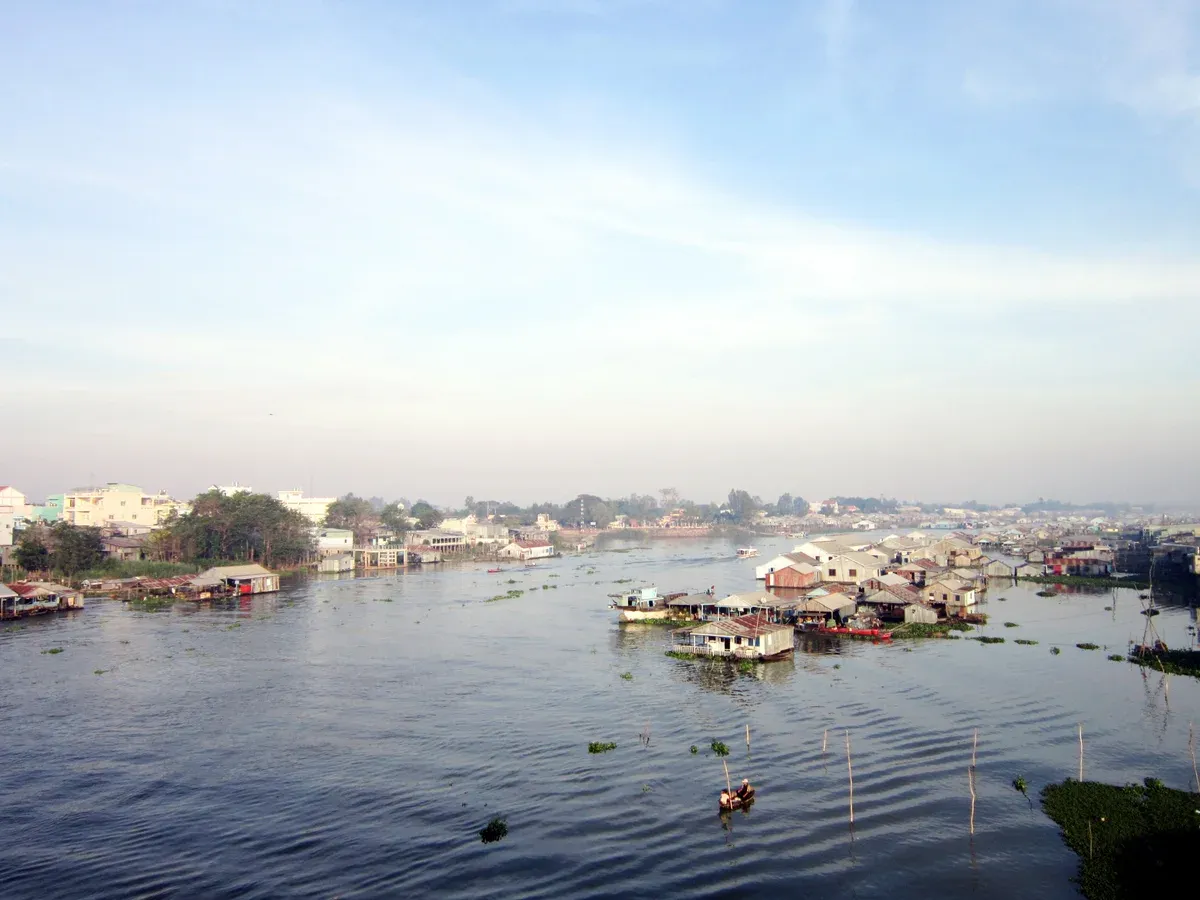
The Chau Doc River in An Giang. Photo: Bùi Thụy Đào Nguyên, CC BY-SA 3.0, via Wikimedia Commons
Typhoons, Floods and Health
Weather and health risks in Vietnam are regional and seasonal rather than constant. Here is what the advisories and the CDC actually say.
Typhoon and Flood Months by Region
The FCDO says the tropical storm season runs from May to November, mainly affecting eastern coastal regions, and can cause serious travel disruption. Canada puts typhoons from June to December and warns they can develop quickly. The practical pattern is regional. The central coast takes its heaviest rain from September to December, with Hue recording 772.7 mm in October and 641.7 mm in November and Da Nang 628.0 mm in October. Vietnam Tourism lists the central typhoon peak as September to November, with the first typhoons possible in July. In the north, typhoon season runs June to October with the realistic window July to September, and Ha Long gets its wettest month in August at 445 mm. The south's wet season runs May to November with afternoon downpours, and the Mekong Delta and areas around Hanoi see common flooding. Phong Nha caves face flooding from October to December.
Canada also notes that El Nino conditions are expected to strengthen through 2026 and into 2027, raising the risk of droughts, floods and severe storms. If your dates fall in the wet window, check the regional breakdown on the best time to visit Vietnam page before you book.
| Region | Wet or storm months | Watch for |
|---|---|---|
| North and Ha Long | Rain June to August, typhoons July to September | Heaviest rain, Ha Long peaks at 445 mm in August |
| Central coast (Hue, Da Nang) | September to December | Typhoon peak September to November, Hue 772.7 mm in October |
| South and Mekong Delta | May to November | Afternoon downpours and common flooding |
| Phong Nha | October to December | Cave flooding |
Water, Dengue and Vaccines
Stick to sealed bottled water in Vietnam. The CDC advises avoiding freshwater swimming and floodwater because of leptospirosis and other water-borne diseases, which matters most in the wet months. For vaccines, the CDC recommends hepatitis A, hepatitis B and typhoid for most travellers to Vietnam and MMR for all travellers. Japanese encephalitis vaccine is recommended for people spending a month or more in affected areas or travelling there often. Yellow fever vaccine is not required for entry.
Dengue is the mosquito risk to take seriously. The CDC rates dengue in Vietnam as a year-round risk and advises repellent with 20 percent or more DEET. Malaria is a different story: Vietnamese cities including Hanoi, Ho Chi Minh City and Da Nang have no malaria transmission, and the Mekong and Red River deltas need no preventive medication. The FCDO also lists air pollution as a health risk in Vietnam, which is worth knowing if you have breathing problems.
Insurance and Emergency Numbers
Both the FCDO and Canada stress insurance. The FCDO says cover should match your itinerary, planned activities and emergency expenses, and advises policies that include air ambulance and repatriation. That last part is not a formality, because Canada notes medical care in Vietnam is better in Hanoi, Ho Chi Minh City and Da Nang and limited elsewhere, and medical evacuation is very expensive. If you plan to ride anything on two wheels, confirm in writing that your policy covers motorbikes, because insurers can reject claims when you ride without a locally valid licence.
Dial 113 for police, 114 for fire and 115 for an ambulance. The national search and rescue hotline is 112. One caution from Wikivoyage, the general emergency number usually does not serve in English, so a taxi may be faster than a public ambulance. For trip budgeting alongside medical cover, see the Vietnam trip cost page. All of this is exactly what a packaged trip simplifies: browse the full range of Vietnam tour packages and let the operator handle local logistics.
What a Tour Package Takes Care Of
A packaged trip removes several of the risks described above by contract, not by luck. Here is what the tour listings state.
Transfers, Guides and Flights on the Tours
Airport transfers are the most concrete safety gain. The FCDO warns that free airport or station bus transfers to hotels may be scams unless arranged in advance, and Canada advises official taxis or trusted apps. The packaged tours instead list a driver meeting you. The $999 9-Day Vietnam Tour, South to North states that a guide and driver meet you at the airport, and the $1,544 14-Day Vietnam Tour, Hanoi to Ho Chi Minh City uses a private driver for its airport transfers with up to 15 people on its shared tours. That sidesteps the arrivals hall tout problem on those tours.
On these tours the long legs between regions are flights. The 9-day tour's itinerary shows 2 domestic flights, Ho Chi Minh City to Da Nang on day 4 and Da Nang to Hanoi on day 6, though its inclusions list one, so confirm both. The 10-day north to south tour at $1,099 also flies twice, Hanoi to Da Nang on day 6 and Da Nang to Ho Chi Minh City on day 8. The $1,998 12-Day Vietnam and Cambodia Tour includes 3 intra-flights, Hanoi to Da Nang, Da Nang to Ho Chi Minh City and on to Siem Reap. That matters because the FCDO says bus and coach crashes are not uncommon, especially at night, and Canada warns of fatal sleeper bus incidents. The tours above do not state travel insurance, so buy that separately as the advisories advise.
Safety Do's and Don'ts
Five habits worth keeping and four worth dropping, each with the reason attached.
Do
- Do carry your bag on the side away from traffic, because the FCDO says motorcycle bag-snatching is common.
- Do use licensed taxis or the Grab and XanhSM apps, because both the FCDO and Canada recommend them and unlicensed taxi drivers have been linked to assaults.
- Do wear a helmet as a passenger too, because the law applies to drivers and passengers alike and it is strictly enforced.
- Do get travel insurance that covers air ambulance and repatriation, because medical evacuation from Vietnam is very expensive and care is limited outside the three big cities.
- Do use repellent with 20 percent or more DEET year round, because the CDC rates dengue as a year-round risk across Vietnam.
Don't
- Don't hand over your passport as a deposit for a rented vehicle, because the FCDO advises against it and a hostel that insists on holding your passport is not legitimate.
- Don't accept a free airport or station bus transfer to a hotel that you did not arrange in advance, because the FCDO warns these may be scams.
- Don't drink spirits of unknown origin, because methanol poisoning from unregulated alcohol has caused deaths in Vietnam, even in licensed venues.
- Don't ride a motorbike without a locally valid licence, because insurers can reject claims and a crash can bring criminal charges, compensation demands or a travel ban.
Safety Questions
Is Vietnam safe for tourists right now?
The UK FCDO's headline warning is the storm season, Canada says take normal security precautions, and the US State Department rated Vietnam Level 1, exercise normal precautions, when its four-level system launched. Violent crime against foreigners is rare, the main risks are petty theft, roads and storms, as covered in the advisory section of this guide to whether Vietnam is safe.
Is it safe to ride the Ha Giang Loop?
It is a real mountain-road risk, not a walk in the park. Motorbikes were involved in 83.61 percent of Vietnam's traffic accidents in early 2026, and oversight of loop tours was tightened after a fatal pillion crash. Riding pillion with a licensed operator avoids the licence problem, and both the 4-Day Ha Giang Loop Tour and the 3-day small-group option run with drivers and capped groups.
Do I need a licence to ride a motorbike in Vietnam?
Yes, and this is where most visitors go wrong. The FCDO says UK riders need a 1968 international driving permit plus their UK licence, Vietcetera says permits issued under the 1949 convention are not valid, and Canada says Canadian licences and permits are not recognized at all. Without a locally valid licence your insurer can reject a claim, as explained in the road rules section of this Vietnam safety guide.
What should I do about typhoon season when booking?
Time your route around the regions. The FCDO puts the tropical storm season from May to November on the eastern coast, the central peak is September to November with Hue recording 772.7 mm of rain in October, and the north's typhoon window is July to September. The regional month-by-month breakdown on the best time to visit Vietnam page shows which areas are safe bets in which months.
Is the tap water in Vietnam safe to drink?
Use sealed bottled water. The CDC also advises avoiding freshwater swimming and floodwater in Vietnam because of leptospirosis and other water-borne diseases, which is most relevant in the wet season, as covered in the health section of this guide on Vietnam travel safety.
What are the emergency numbers in Vietnam?
Dial 113 for police, 114 for fire and 115 for an ambulance, with 112 as the national search and rescue hotline. Note that the general emergency number usually does not serve in English, and keep insurance that covers air ambulance and repatriation, because Canada says medical evacuation from Vietnam is very expensive. More on cover and health prep is in this Vietnam safety guide.